
Portable restrooms only work when service schedules match real-world use. Ask ten rental companies how often are porta potties serviced, and you’ll hear the same baseline answer: weekly. What rarely gets explained is when weekly service fails, why it fails, and how to plan around it before sanitation turns into a problem.
Cleanliness is not about ticking boxes. It’s about keeping portable toilets sanitary throughout their use, whether that’s a construction job site or a crowded weekend event.
How often are porta potties serviced?
In most standard rental scenarios, porta-potties are serviced once per week. That weekly service acts as the industry baseline, not a guarantee of cleanliness. It assumes limited traffic, average weather, and a reasonable number of users per unit.
Once any of those variables shift, the servicing schedule needs adjustment. High traffic areas, extended rental periods, and warm weather accelerate waste buildup and odor. In those cases, how often are porta potties serviced may increase to twice per week or even daily.
Servicing is not optional maintenance. It is what keeps portable toilets sanitary, stocked with toilet paper and hand sanitizer, and safe for continued use.
Typical servicing frequency by usage level
| Usage Scenario | Recommended Servicing Frequency |
| Low-traffic, long-term placement | Weekly service |
| Moderate daily use | 1–2 times per week |
| High traffic area | Every 1–2 days |
| Multi-day events | Daily or mid-event |
| Extreme heat conditions | Increased frequency |
Weekly service vs frequent servicing
Weekly service works only when usage stays stable. Frequent servicing exists to prevent breakdowns, not to fix them after the fact. The difference between the two often determines whether portable restrooms remain usable or become a liability.
| Service Type | Typical Use Case | What It Prevents | When It Fails |
| Weekly service | Small crews, predictable traffic | Waste buildup, supply shortages | High heat, crowd spikes |
| Twice-weekly service | Busy construction sites | Odor escalation, overflow | Underestimated crew size |
| Multi-visit weekly service | High traffic area or long events | Complaints, health concerns | Rarely fails when planned |
Weekly service controls cost. Frequent servicing controls outcomes. Choosing between them should follow usage reality, not habit.
Factors that change the servicing schedule
Service schedules shift when conditions shift. Most problems happen because one or more of these factors are ignored during planning.
| Factor | Why It Matters | Impact on Servicing |
| User count | Directly affects tank fill rate | Higher use needs more visits |
| Weather conditions | Heat accelerates odor and bacteria | Increases frequency |
| Duration | Longer rentals compound wear | Requires scheduled resets |
| Unit placement | Central units see heavier traffic | Uneven servicing demand |
| Supplies like toilet paper | Runout signals overuse | Triggers early service |
Ignoring even one variable often leads to a dirty porta potty by mid-cycle. Adjusting service before problems appear keeps conditions stable.
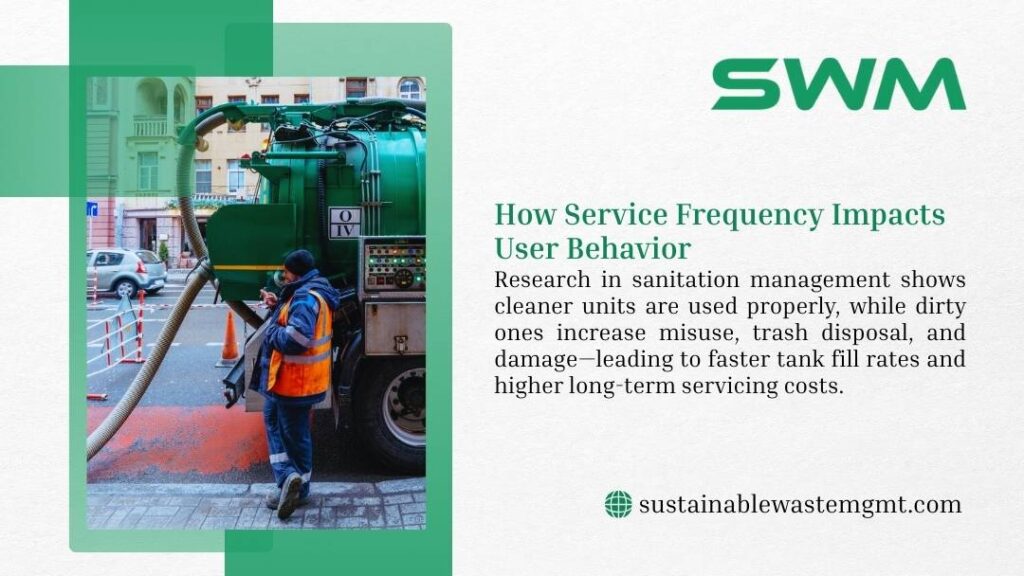
How do porta potties get emptied and cleaned
How do porta potties get emptied follows a standardized process. Service trucks use vacuum pumps to remove waste from the holding tank. After emptying, technicians rinse and disinfect interior surfaces, including the seat, urinal, and door handles. Fresh deodorizing solution is added, and supplies like toilet paper and hand sanitizer are replenished.
This process answers both how are porta potties cleaned and how do porta potties get cleaned in one visit. When done on schedule, the unit remains functional and sanitary throughout its placement.
What a standard service visit includes
| Service Task | Purpose |
| Waste removal | Prevents overflow and odor |
| Interior sanitizing | Reduces bacteria and contact risks |
| Chemical recharge | Controls smell and breakdown |
| Supply restocking | Maintains user comfort |
| Inspection | Identifies damage or leaks |
How do porta potties work and why does it matters
How do porta potties work becomes more relevant once you look past the basics and consider what happens during extended use. A portable toilet is not a passive container. It is a closed system designed to manage waste volume, airflow, moisture, and bacterial activity within tight limits. When those limits are respected, the unit stays functional. When they are ignored, conditions deteriorate quickly.
The holding tank operates under a fixed capacity, usually between 50 and 70 gallons. Chemical treatments slow bacterial growth and reduce odor, but they do not stop it. Each use introduces additional liquid, solids, and paper. Over time, chemical balance weakens, and odor control relies more on ventilation than chemistry. This is why service timing matters more than the strength of deodorizer alone.
Ventilation plays a quiet but critical role. Airflow systems rely on temperature differences to move gas upward and out. In cooler conditions, this process works efficiently. In hot, humid weather, airflow slows while odor production increases. Without timely servicing, even well-designed ventilation systems become overwhelmed.
Another overlooked factor is surface contamination. Waste is not the only concern inside a portable restroom. Contact points such as door handles, seats, and interior walls accumulate bacteria long before tanks reach capacity. Regular servicing addresses these areas through sanitizing, which is why service frequency directly affects hygiene, not just smell.
Understanding how does a porta potty work also explains why misuse accelerates failure. Improper disposal of trash, excessive paper use, or blocked vents disrupt the system’s balance. Once airflow or tank volume is compromised, conditions decline faster than most renters expect.
| System Component | Function | Why It Matters |
| Holding tank | Stores waste safely | Limited capacity controls service timing |
| Chemical treatment | Reduces odor and bacteria | Weakens with heavy use |
| Ventilation stack | Moves gas upward | Less effective in heat |
| Interior surfaces | Contact hygiene | Requires sanitizing, not just pumping |
| Structural seals | Prevent leaks | Wear increases contamination risk |
Why this matters comes down to predictability. When renters understand the mechanics, service schedules become proactive instead of reactive. Porta potties that receive timely servicing stay sanitary, last longer, and avoid emergency interventions. Those that don’t often fail suddenly, usually when usage peaks.
In short, how do porta potties work is not trivia. It is the difference between planning a service schedule that holds up under pressure and one that collapses when conditions change.
Construction sites and OSHA-aware scheduling
Construction sites introduce compliance pressure alongside sanitation needs. OSHA requires that portable restrooms remain sanitary, not merely serviced on a fixed interval. ANSI guidance, referenced by OSHA, shows why frequency must scale with crew size.
| Crew Size | Unit Count | Recommended Service | Risk if Ignored |
| Up to 10 workers | 1 unit | Weekly service | Minimal |
| 11–20 workers | 1–2 units | Twice weekly | Overflow risk |
| 20+ workers | Multiple units | Multi-visit weekly | Non-compliance |
Busy construction sites rarely stay static. As crews expand, service schedules must adjust immediately to stay compliant.
Events, weddings, and short-term rentals
Events create sharp spikes in usage rather than steady patterns. Planning service for events means accounting for guest expectations as well as volume.
| Event Type | Attendance Pattern | Typical Service Need |
| One-day public event | Short, intense use | Pre-event service |
| Weekend festival | Sustained traffic | Between-day service |
| Wedding | Moderate but expectation-driven | Enhanced cleaning |
| Multi-day fair | Continuous use | Daily or alternating service |
Event rentals fail most often when planners assume construction-style schedules will work for guests. They don’t.
Recommended servicing schedules by scenario
This table reflects real-world conditions rather than ideal assumptions.
| Scenario | Usage Profile | Suggested Schedule |
| Residential job site | Low, consistent | Weekly |
| Commercial job site | High, daily | Twice weekly |
| Outdoor summer event | Heat + crowds | Daily |
| Multi-day festival | Continuous | Morning resets |
| Long-term rental | Variable | Adjustable plan |
Service schedules should stay flexible. Locking into the wrong frequency costs more over time.
Dirty porta potty warning signs
Problems rarely appear without warning. Recognizing early signs allows renters to correct service intervals before conditions deteriorate.
| Warning Sign | Likely Cause | Required Action |
| Strong odor | Chemical dilution | Immediate service |
| Empty supplies | Overuse | Increase frequency |
| Visible waste | Tank near capacity | Emergency pump-out |
| Door or vent issues | Heavy wear | Inspection during service |
A dirty porta potty reflects planning failure, not just cleaning failure.
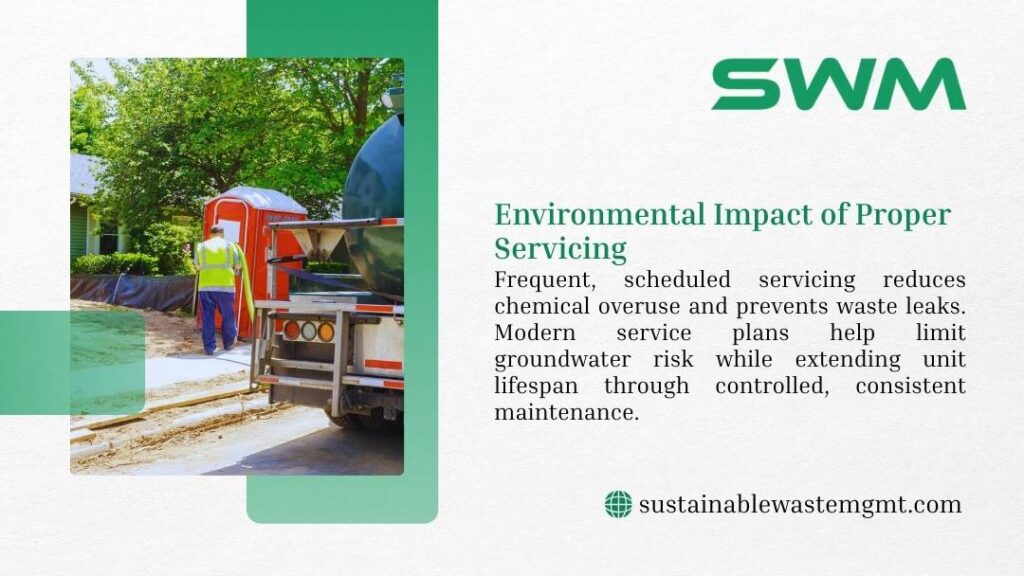
How many people per porta potty affects service needs
Capacity planning drives sanitation outcomes. One unit serving too many people increases fill rate and accelerates odor buildup.
| Users per Unit | Duration | Service Impact |
| Up to 10 | Full week | Weekly works |
| 10–20 | Full week | Twice weekly |
| 50+ | Event use | Multiple daily visits |
Correct unit ratios reduce the need for emergency servicing and improve overall hygiene.
Cost considerations tied to service frequency
Service frequency directly affects cost, but under-servicing often costs more long-term.
| Service Level | Short-Term Cost | Long-Term Risk |
| Minimal | Lower | Complaints, damage |
| Balanced | Moderate | Stable conditions |
| High frequency | Higher | Maximum sanitation |
Paying for proper servicing protects equipment, reputation, and compliance.
Planning prevents problems
Most sanitation issues begin during booking, not usage. Planning allows service schedules to reflect expected attendance, weather, and duration. Adjustments made early cost less than emergency corrections later. Flexibility matters. The ability to increase servicing mid-rental often separates professional operations from reactive ones.
Why the right schedule matters
How often are porta potties serviced shapes everything that follows. Clean units protect health, reduce complaints, and keep projects moving. Poorly serviced units do the opposite.
If you want portable restrooms that stay sanitary from pickup delivery, the schedule must match reality. Sustainable Waste Management builds service plans around usage, not shortcuts. Whether it’s a construction site or a major event, the right servicing schedule keeps things clean, compliant, and problem-free.